April 7, 2025
Why Turboprops Are the Backbone of Canadian Aviation
How geography, risk aversion, sustainability, and long-term thinking make the turboprop the most strategic aircraft class for Canadian operators, businesses, and communities.

Canada’s Aircraft Class
Canada is the second-largest country in the world – a logistical, environmental, and resource-heavy outlier. Its vast geography, severe climate, and dispersed population make aviation not just important, but indispensable. In regions not easily accessible by rail or road, aircraft deliver everything from medical care and food supplies to emergency response – critical services that underpin both daily life and national resilience. For hundreds of northern and rural communities, air travel is not a luxury – it is the only link to the rest of the country, and often, to the rest of the world.
“For hundreds of northern and rural communities, air travel is not a luxury – it is the only link to the rest of the country, and often, to the rest of the world.”
Within this context, one class of aircraft has decisively emerged as the backbone of Canadian regional and utility aviation: the turboprop. These aircraft are powered by turbine engines that drive a propeller, offering a combination of fuel efficiency, short takeoff performance, and versatility that makes them especially well-suited for rugged and remote operations. As of writing, turboprops make up 59 percent of Canada’s business aircraft fleet, with roughly 757 registered turboprops compared to 532 jets.1 That majority is not coincidental – it reflects what Canadian operators prioritize when range, reliability, and flexibility matter most. Turboprops are not relics of the past. In fact, the evolution of turboprop technology – from more efficient engines to state-of-the-art avionics – means these aircraft continue to define what capability looks like in the most demanding environments.
Business Aircraft Powering Canadian Skies: Top Models by Estimated Flight Hours in 2024
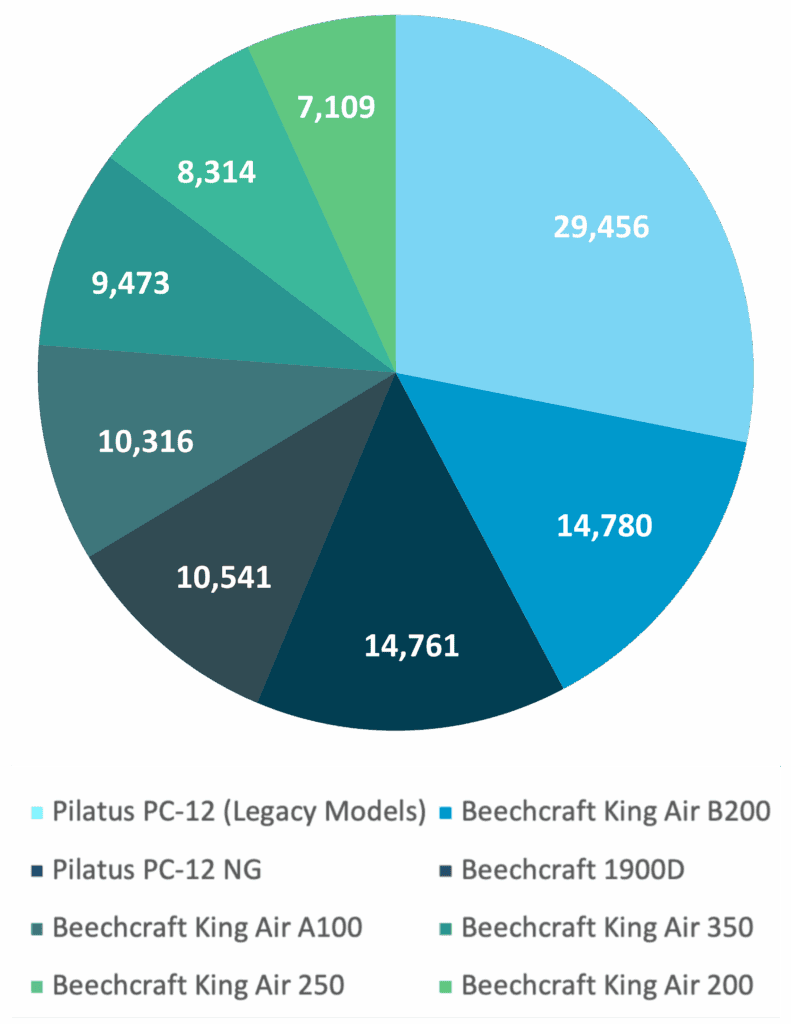
In respect to fleet size, the most widely flown turboprops in Canada include the Cessna Caravan series (143 aircraft), the Beechcraft King Air 200 series (118 aircraft), and the Pilatus PC-12 family (over 120 aircraft).² These models lead not just in volume, but in suitability for Canadian missions – from short-field medevac and mining access to northern community logistics and charter.
This paper explores why turboprops are more than a legacy solution – they are Canada’s future. From fuel efficiency and short-field performance to superior cost management and environmental alignment, turboprops offer a uniquely Canadian combination of resilience, adaptability, and practicality.
Why Turboprops Dominate in Canada
Geography Favours Versatility
With nearly 1,300 land and 400 water aerodromes and many unpaved airstrips across the country, Canada’s aviation network demands aircraft that can operate in challenging operating environments.3 Whether it is landing on a snow-covered gravel strip in Nunavut or flying into a private mine access runway in Northern Québec, turboprops offer unmatched short and remote runway access, ideal for Canada’s dispersed aerodrome network.

Conservative Capital, Enduring Value
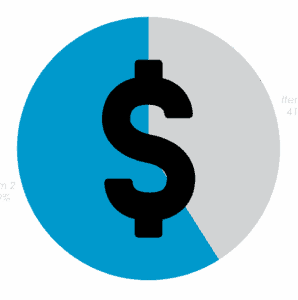
Canadian businesses have long taken a measured approach to capital investment – rooted in long-term value, cost discipline, and a preference for proven utility over untested upside. In 2023, Canadian firms invested just 41 cents in machinery and equipment for every dollar spent by their U.S. counterparts, a clear indicator of this cautious, value-conscious mindset.⁴
“In 2023, Canadian firms invested just 41 cents in machinery and equipment for every dollar spent by their U.S. counterparts, a clear indicator of this cautious, value-conscious mindset.”
In aviation, this translates into choosing aircraft that deliver reliable performance, predictable operating costs, and strong asset retention. Turboprops align precisely with this approach – combining fuel efficiency, operational flexibility, and durability. They are a strategic fit for both single-aircraft operators and diversified fleets seeking dependable return on invested capital.
Sustainability Without Sacrifice
Canada is committed to reducing carbon emissions across all sectors, including aviation. Turboprops emit significantly less carbon dioxide (CO₂) than jets on short- and mid-range routes, making them a logical choice for operators with environment, social, and governance (ESG) goals.
Moreover, many turboprops are capable of using sustainable aviation fuels (SAF), making them future-proof against tightening regulatory environments. By burning less fuel and using infrastructure more efficiently, turboprops not only cost less to operate – they place less strain on the environment as well.
“By burning less fuel and using infrastructure more efficiently, turboprops not only cost less to operate – they place less strain on the environment as well.”
Supporting Canadian Infrastructure and Aviation
Turboprops do more than move people and goods – they move value through the Canadian economy. Unlike many jets, which tend to concentrate around major hubs, turboprops connect Canada’s remote and regional communities by landing on short, gravel, and seasonal runways that many jets often cannot access. That connectivity fuels economic activity where it matters most.
Their widespread use supports a broad network of Canadian aviation services – from charter operators and Indigenous-owned airlines to pilot training programs, local maintenance providers, and parts distributors. These aircraft work in-step with Canada’s geography, ensuring that capital invested in aviation also strengthens the domestic ecosystem.
In that sense, choosing turboprops is not just an operational decision – it is a strategic one. It keeps dollars in-country, supports skilled jobs, and builds long-term resilience into Canada’s aviation infrastructure.

A Category That Reflects Canada
The best turboprops – those with high dispatch reliability, flexible cabin configurations, and strong secondary market demand – stand out naturally in Canada’s demanding aviation landscape. Turboprops are not a compromise. They are a strategic advantage. In the years ahead, as Canada continues to expand access, support the North, and align economic growth with sustainability, the case for turboprops will only grow stronger.
Turboprops are not just a fit for Canada. They are a reflection of it.
Click here to download the report
Questions or looking to discuss what this means for your operations?
Contact us at sales@levaero.com or call +1 905-672-2000
1 AMSTAT, AMSTAT Premier+ Platform. https://www.amstatcorp.com/amstat-premier-platform.
2 AMSTAT, AMSTAT Premier+ Platform. https://www.amstatcorp.com/amstat-premier-platform.
3 Transport Canada, Addendum Tables – A1: Number of Aerodromes in Canada, 2012–2022, https://dv7.openplus.ca/en/addendum-tables/2022/a1-number-aerodromes-canada-2012-2022.
4 C.D. Howe Institute, Underequipped: How Weak Capital Investment Hurts Canadian Prosperity – and What to Do About It, February 2024. https://cdhowe.org/publication/underequipped-how-weak-capital-investment-hurts-canadian-prosperity-and-what/.