January 22, 2025
When determining aircraft value, several key factors contribute to how its worth evolves over time. Understanding these elements is critical for buyers, sellers, and operators alike, as they shape the long-term investment outlook of an aircraft.
Age and Its Impact on Aircraft Value
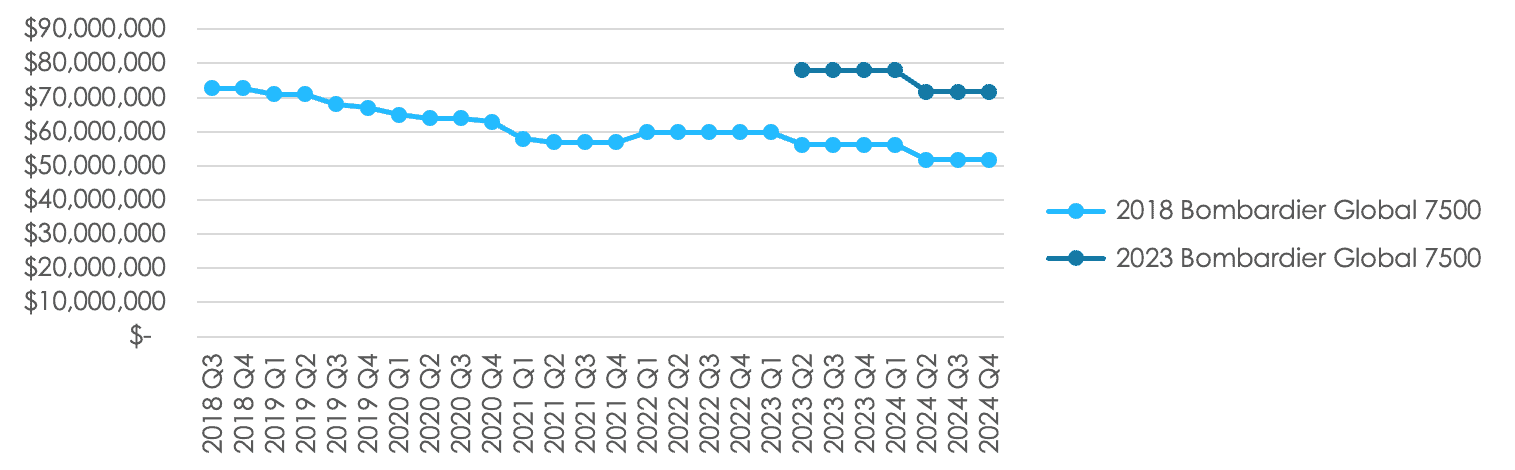
The age of an aircraft significantly impacts its value, with depreciation patterns varying by aircraft type. Generally, turboprops and jets follow different depreciation schedules. Newer aircraft often experience sharper value declines in the first few years, typically stabilizing after this initial period. In contrast, older models may face continued depreciation due to increased maintenance needs and obsolescence. However, the market’s perception of older versus newer models plays a critical role, influenced by factors like technological advancements in aircraft and external economic, social and geopolitical environments. That said, well-maintained older aircraft with retrofits, avionics upgrades, or on engine programs can retain value better than more neglected models. Technological advancements in newer aircraft, such as more efficient engines and advanced avionics, often shift market preferences, further impacting the value of older aircraft. For example, a 2023 Bombardier Global 7500, featuring state-of-the-art technology, has an average retail value of approximately $71.76M. A comparable 2018 model, despite being the same make and model, reflects depreciation with an average value of just under $51.76M. When considering an aircraft purchase, it is crucial to evaluate makes and models that depreciate more slowly and are likely to retain value over time, ensuring a sound investment.
Aircraft Value History
Usage: Total Flight Hours and Cycles
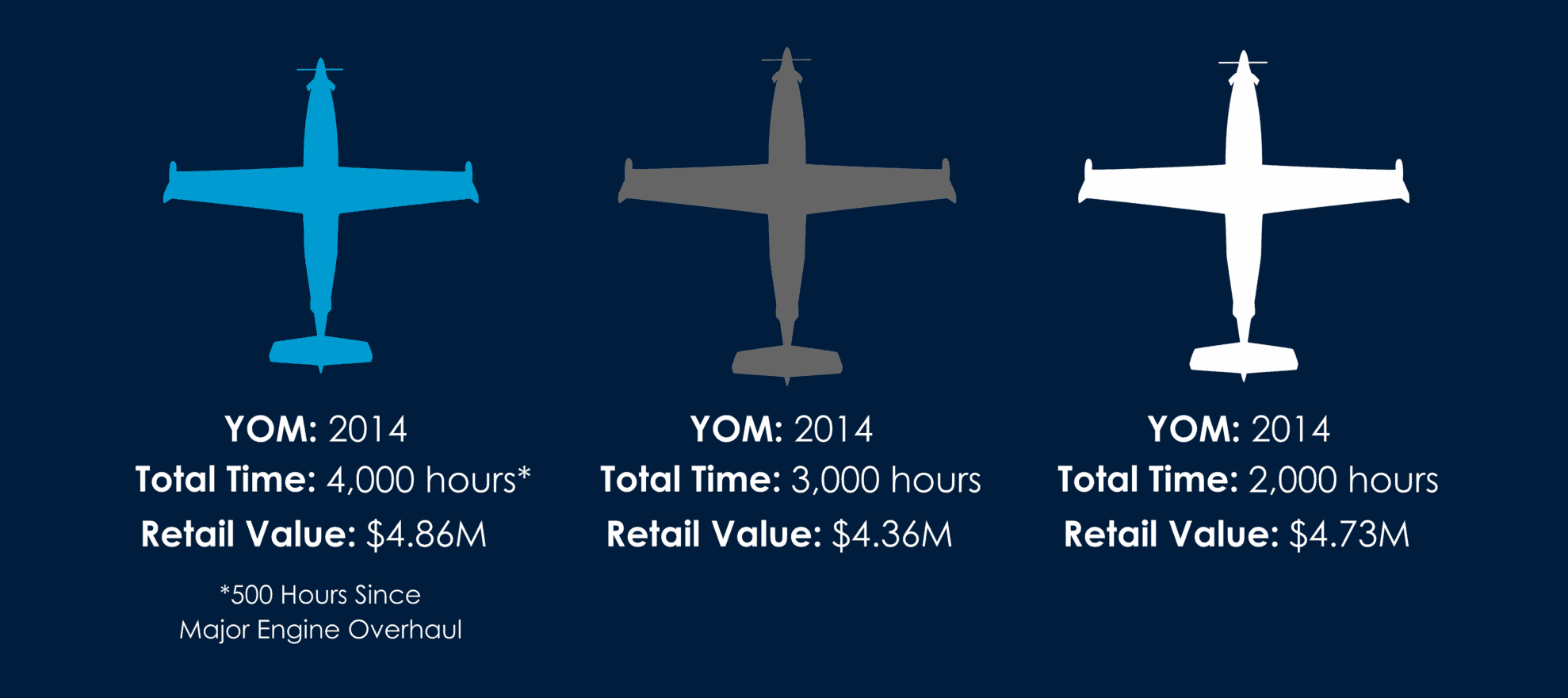
Another vital factor impacting value is the frequency in with which an aircraft is flown. Aircraft usage is measured by total flight hours and cycles, with different patterns of usage – private versus commercial – having potential varying effects on value. An aircraft with lower hours and fewer cycles will often fetch a higher price, assuming it is in good condition, as it has seen less wear and tear. However, an aircraft that has been used consistently for commercial purposes may exhibit more depreciation due to higher utilization rates. Aircraft maintained under rigorous maintenance programs despite high flight hours may still retain value due to the assurance that components have been replaced and systems remain in good working order. To illustrate the impact of engine time and overhauls on value, as of writing, a 2014 PC-12 NG not on an engine program, having flown an average of 400 hours per year, and accumulated a total time of 4,000 hours (500 hours since major engine overhaul) has a market value around of $4.86M. By comparison, the same 2014 aircraft with 1,000 fewer hours – 3,000 hours on the airframe and engine – has a market valuation of about $4.36M, as of writing. The same aircraft with 2,000 hours on the airframe and engine has a market value of around $4.73M. You can see here that the valuation of an aircraft is dependent on various factors, with the time on engine, proximity to overhaul milestones, and airframe hours, playing key parts.
Pilatus PC-12 NG Comparison of Valuation
Condition: Exterior, Interior, and Upgrades
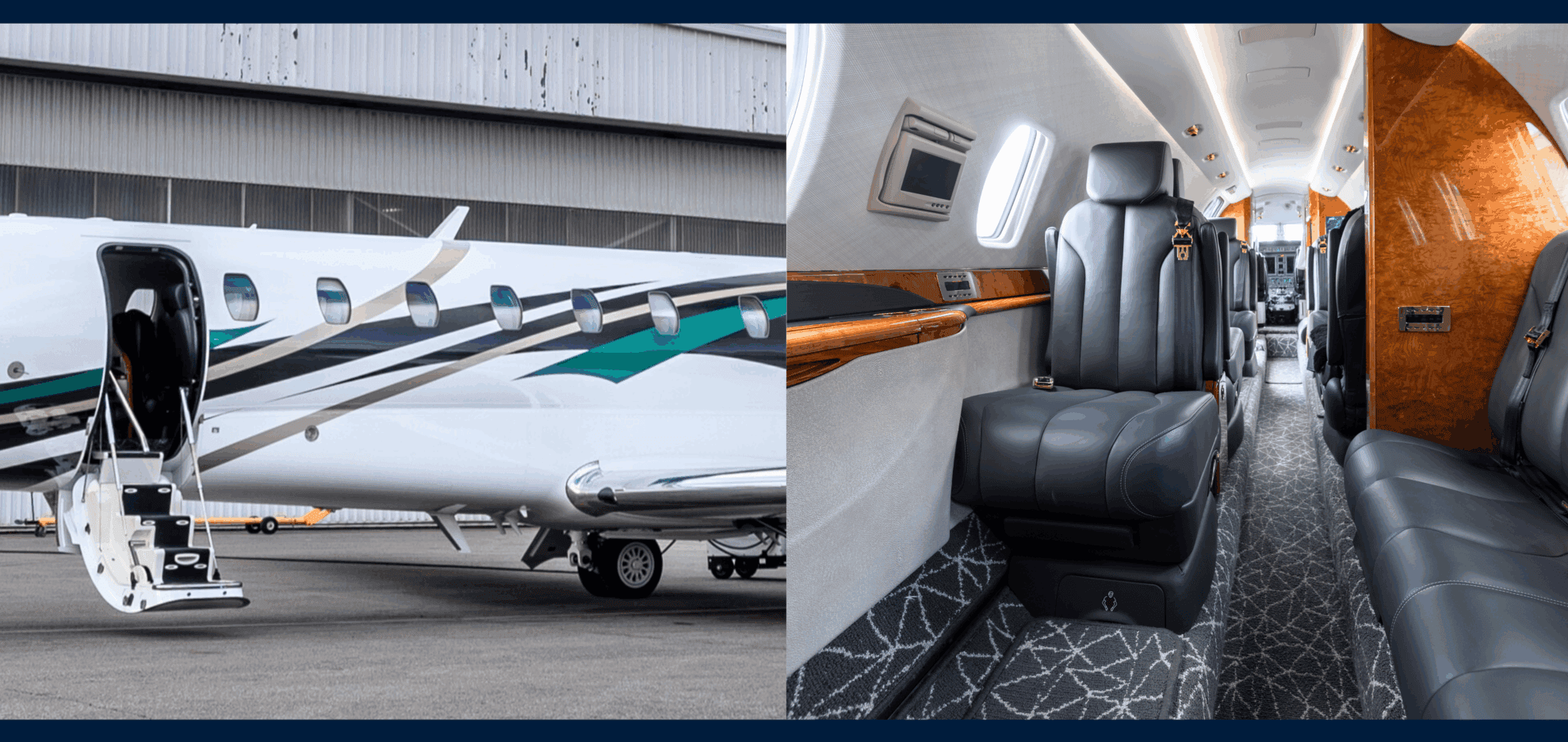
The aircraft’s physical condition is another key consideration. A well-preserved interior and exterior, combined with key avionics upgrades and any major overhauls, can significantly impact resale value. Buyers tend to value aircraft that have seen regular upgrades, such as avionics modernization. A fresh paint update or the upgrade of older components helps to maintain market value, particularly if the aircraft’s appearance matches that of a new model.
Maintenance History and Logs
An aircraft’s maintenance history is crucial in valuation. Detailed and well-documented maintenance logs are an assurance to prospective buyers that the aircraft has been properly cared for. Aircraft that have followed manufacturer-recommended inspection schedules and have undergone timely component replacements at reputable establishments tend to maintain their value better over time. Moreover, the presence of a clear record of all maintenance events signals a commitment to aircraft longevity and performance, giving potential buyers confidence in the aircraft’s continued operational efficiency. An aircraft with missing maintenance history and logs can see value impacted by 50 per cent or more.
Production Rates and Market Impact
Production rates play a significant role in shaping aircraft values. When OEMs (Original Equipment Manufacturers) overproduce to capture market share, the resulting oversupply can dampen demand and lower residual values. On the other hand, methodical production levels, calibrated to maintain balance with market demand, can help sustain higher resale values for aircraft over time.
OEM Pricing Discounting and Perceived Value
OEM pricing strategies also affect market dynamics. Aggressive discounting by manufacturers – though seemingly beneficial to buyers – can lead to a market-wide reset of an aircraft’s perceived value. When discounted aircraft flood the market, resale values of similar models may erode, undermining long-term value retention for owners.
Broad User Base Enhances Value Retention
Aircraft with a broad market appeal tend to retain their value more effectively. A wider user base translates to increased demand, which not only facilitates quicker sales but also supports stronger resale values. Models with versatile configurations or a reputation for reliability, like the Pilatus PC-12 or Citation Excel/XLS, exemplify this trend. Buyers seeking market stability often prioritize such models due to their established reputation and consistent buyer interest.
Interesting Fact
Despite their age, some older aircraft models can retain significant value due to upgrades and careful maintenance. For example, well-maintained aircraft with advanced avionics retrofits or refurbished interiors can compete with newer models on the market. Aircraft like the Pilatus PC-12, which has a long-standing reputation for reliability, hold value their due to the ability to keep them updated over time.